How to Choose Countertop Thickness and Edge Profiles
Countertop thickness and edge profile affect both the look and durability of your new counters, and most homeowners haven't had to think about either until replacement day. B&M Painting and Construction walks London, KY customers through both choices during the free 3D design consultation.
Common Countertop Thickness Options
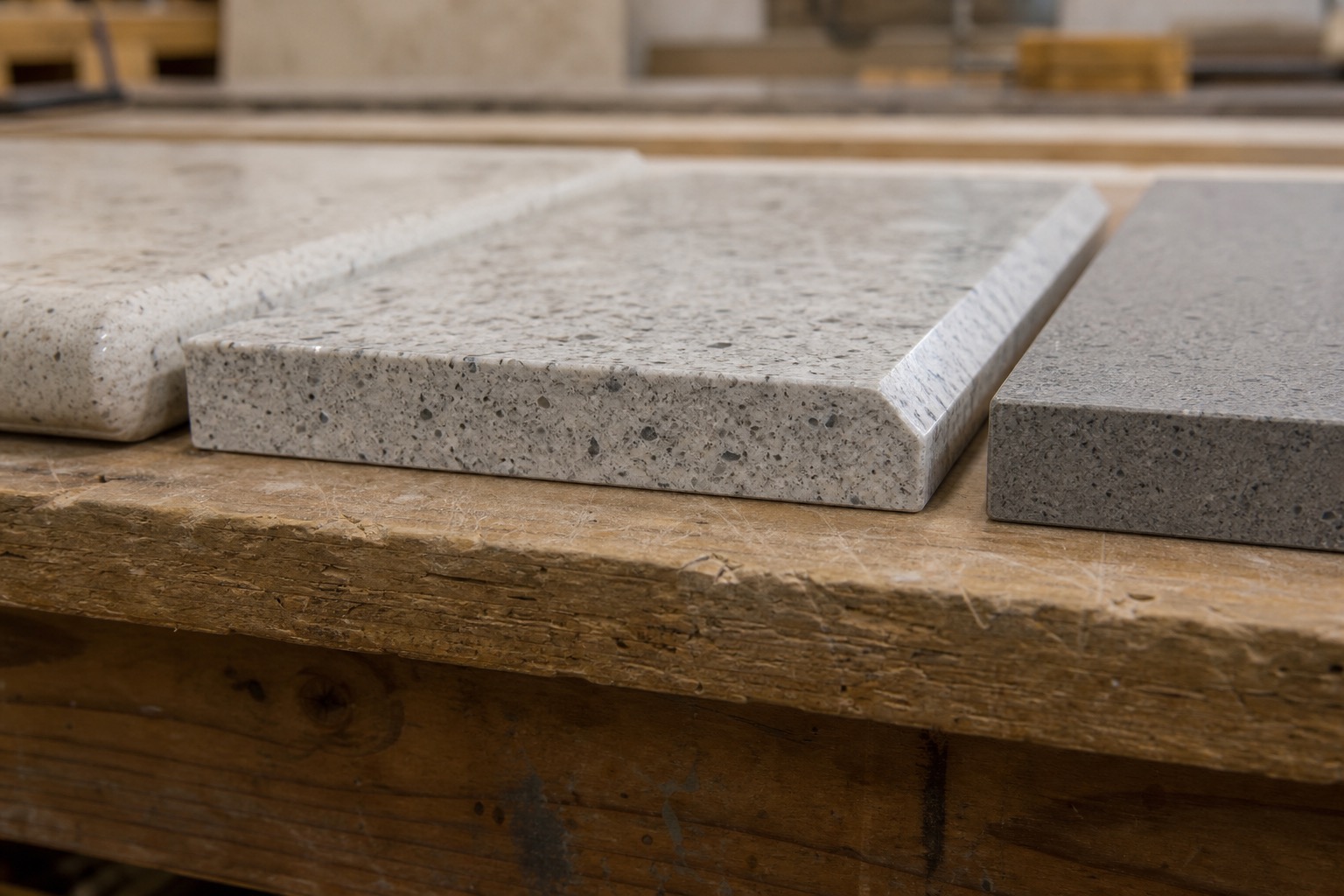
Most countertops come in two standard thicknesses: a slimmer profile around 2 centimeters and a thicker option near 3 centimeters. The thicker option gives a more substantial, high-end look and slightly more strength at unsupported edges like overhangs.
Some homeowners choose the thinner option with a built-up edge to get the appearance of a thick slab at a lower material cost, which we can show during your design consultation.
We also discuss how the chosen thickness will look at the sink and stovetop cutouts, since these areas expose the edge of the material and can look noticeably different between a thin and thick slab even if the rest of the counter looks similar from above.
How Thickness Affects Cost and Support
Thicker slabs generally cost more due to material weight and handling, and they may require additional cabinet or support bracing for large overhangs like a kitchen island. We assess your cabinetry during the estimate to confirm what support is needed for the thickness you choose.
Thinner countertops are more budget-friendly but may need extra edge treatment or additional bracing on longer unsupported spans.
Backsplash height and style should be considered alongside edge profile, since a more decorative edge like an ogee often pairs best with a simpler backsplash, while a plain straight edge can support a bolder tile or stone backsplash design without looking too busy together.
Popular Edge Profile Options
A straight, eased edge gives a clean, modern look and is the easiest to keep clean. A bullnose edge, with its fully rounded profile, is a popular choice for families with young children due to the lack of sharp corners.
Beveled and ogee edges add a more decorative, traditional look and work well in kitchens with detailed cabinetry or trim work.
Lighting in the kitchen can also change how an edge profile reads, similar to how it affects wall paint color. A beveled edge that looks subtle under bright daylight can cast a more noticeable shadow line under warm evening lighting, which we point out during the consultation.
Matching Edge Profile to Kitchen Style
Modern kitchens with clean cabinet lines often pair well with straight or eased edges, while traditional kitchens tend to suit bullnose or ogee profiles that echo more detailed trim work elsewhere in the room.
We bring physical edge samples to your design consultation so you can see and feel the profile against your own cabinets before making a final decision.
We also factor in how the countertop meets an island or peninsula edge, since a thicker slab can create a more dramatic look on an island's exposed side compared to countertops against a wall with cabinets below.
Balancing Budget, Style, and Function
The right combination of thickness and edge profile comes down to balancing your budget, how the kitchen is used daily, and the overall style of the home. A busy family kitchen may prioritize a durable, easy-clean bullnose edge, while a formal kitchen might lean toward a thicker slab with an ogee edge.
We walk through all of these tradeoffs during your free 3D design consultation so there are no surprises once installation day arrives.
We also talk through long-term resale considerations during this conversation, since certain thickness and edge combinations tend to appeal more broadly to future buyers if resale value is a consideration for your London, KY home.
Getting a Physical Sample Before You Decide
Photos and online images rarely capture how an edge profile actually feels under your hand or how a slab thickness reads in person, which is why we always recommend touching a physical sample before finalizing a decision.
During your free 3D design consultation, we bring real material and edge samples so you're choosing based on how your countertop will actually look and feel in your London, KY kitchen, not just a picture.
Once a homeowner has settled on both thickness and edge profile, we finalize measurements and move to fabrication, keeping the same sample on hand during installation to confirm the finished product matches exactly what was chosen during the consultation.
Conclusion
Getting the details right on how to choose countertop thickness and edge profiles is part of how B&M Painting and Construction delivers lasting results for countertop replacement across London, KY. If you have questions about your own project, our team is happy to help.
Frequently Asked Questions
Both 2-centimeter and 3-centimeter thicknesses are common, with the 3-centimeter option offering a more substantial, high-end appearance.
A bullnose edge, with its fully rounded profile and lack of sharp corners, is a popular choice for households with young children.
Yes, thicker slabs generally cost more due to material weight and handling, and may require additional cabinet support for overhangs.
Yes, we bring physical edge samples to your free 3D design consultation so you can compare options against your own cabinets.