Drywall Installation Finishing Techniques
Hanging drywall is only half the job — the finishing techniques applied afterward determine whether the final wall looks smooth and professional or shows every seam and screw hole. B&M Painting and Construction applies the same finishing standards to every drywall installation in London, KY.
Taping Every Seam Correctly
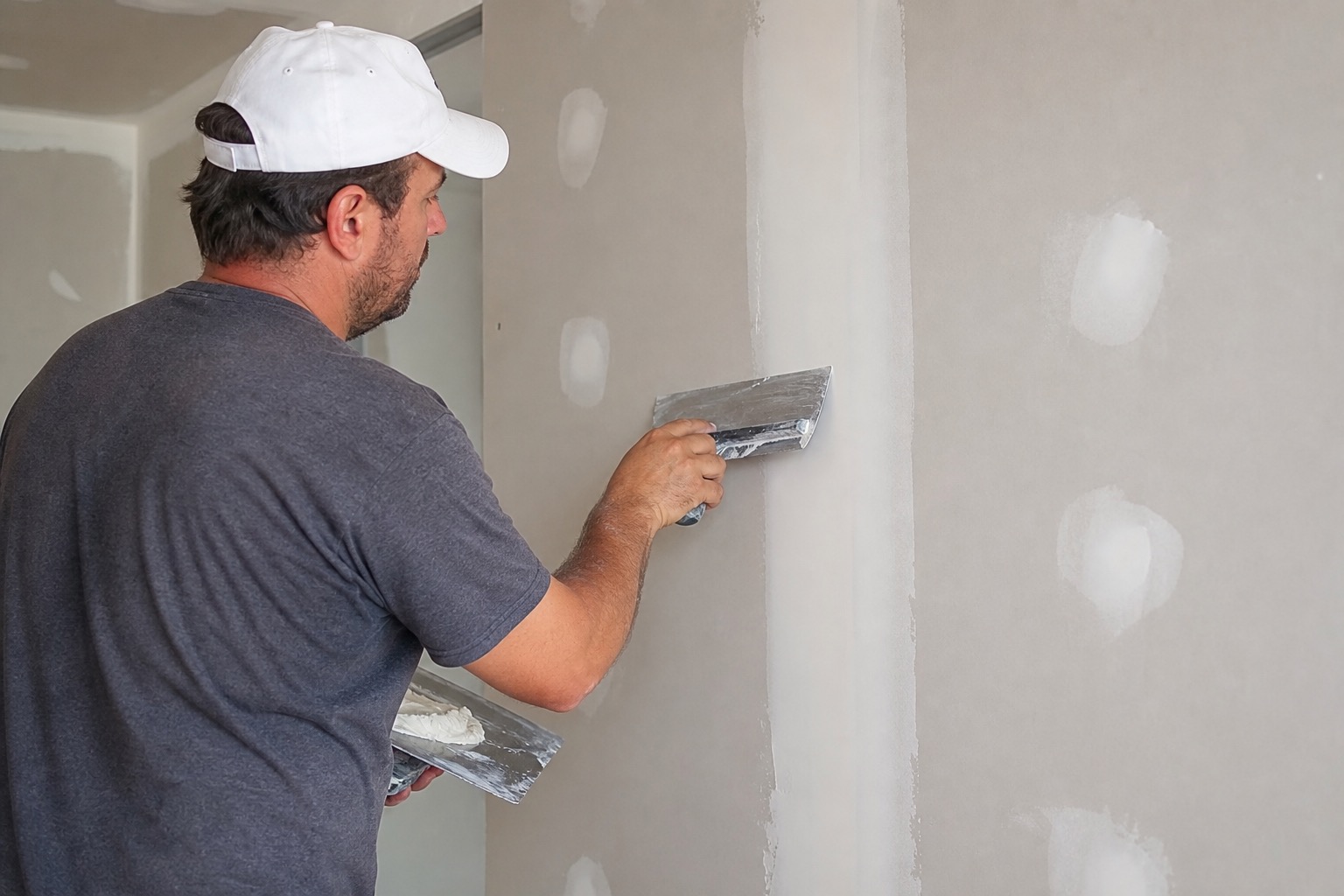
Every seam between drywall sheets gets a layer of joint tape embedded in compound before any additional coats are applied, which reinforces the joint and prevents cracking as the house settles over time.
Corner seams, both inside and outside, use specific tape and technique to create sharp, straight lines rather than rounded or uneven edges.
We also stagger seams across a room whenever the layout allows, since aligning too many seams in a single line can make even a well-finished joint slightly more noticeable under certain lighting conditions.
Covering Screw Holes and Fasteners
Every screw used to hang drywall leaves a small dimple that needs multiple thin coats of compound to fully disappear once sanded and painted.
We check for any screws that weren't set deep enough during hanging, since a proud screw head can telegraph through paint even after multiple coats of compound.
We also plan electrical box and vent cutouts carefully before hanging sheets, since a poorly measured cutout can leave a gap that's difficult to finish cleanly compared to a precisely cut opening from the start.
Applying Multiple Coats the Right Way
We apply a minimum of three coats over seams and fastener holes, each one wider and thinner than the last, allowing full drying time between each application.
Rushing this process by combining coats or skipping drying time is one of the most common reasons new drywall installations show visible seams once painted.
Ceiling seams get particular attention during finishing, since overhead lighting fixtures often create the kind of raking light that reveals any unevenness in a ceiling joint far more easily than a wall seam in the same room.
Sanding for a Seamless Wall
Between coats, light sanding removes ridges and high spots so the next coat goes on smoothly rather than building up unevenly over rough texture.
The final sanding pass is done under strong side lighting, which reveals any remaining imperfections that overhead lighting alone would hide.
We keep a written punch list during larger installation projects, noting any seam or fastener area that needs an extra coat, so nothing gets missed once multiple rooms or a full addition are being finished at the same time.
Priming Before the First Paint Coat
New drywall is highly absorbent and needs a dedicated drywall primer before paint, which seals the surface and helps the finish coat apply evenly across both the drywall and the joint compound areas.
Skipping primer on new drywall installation is one of the most common reasons a fresh paint job looks patchy or uneven, since the compound areas absorb paint differently than the paper-faced drywall.
Once the final coat is sanded, we vacuum the room thoroughly before priming, since leftover dust on the wall surface can affect how evenly the primer and paint adhere to the new drywall.
Timeline Expectations for a Full Room
A full room of new drywall installation typically takes several days from hanging through final sanding, since each coat of compound needs adequate drying time before the next can be applied.
We build this timeline into every estimate so London, KY customers know what to expect before signing off on a renovation or addition project involving new drywall.
Before handing a newly installed and primed room back to a customer, we do a final walk-through with a flashlight along every wall, confirming the surface is ready for paint without any remaining flaws that would be harder to fix once color is applied.
Conclusion
Getting the details right on drywall installation finishing techniques is part of how B&M Painting and Construction delivers lasting results for drywall installation across London, KY. If you have questions about your own project, our team is happy to help.
Frequently Asked Questions
We apply a minimum of three coats over seams and fastener holes, each wider and thinner than the last, with full drying time between coats.
This usually means the screw wasn't fully set during hanging, or not enough thin coats of compound were applied to fully cover the dimple.
Yes, new drywall is highly absorbent and needs a dedicated primer to seal the surface evenly before the first paint coat.
We do a final sanding pass under strong side lighting, which reveals ridges or high spots that overhead lighting alone would hide.