Drywall Repair Tools and Materials Guide
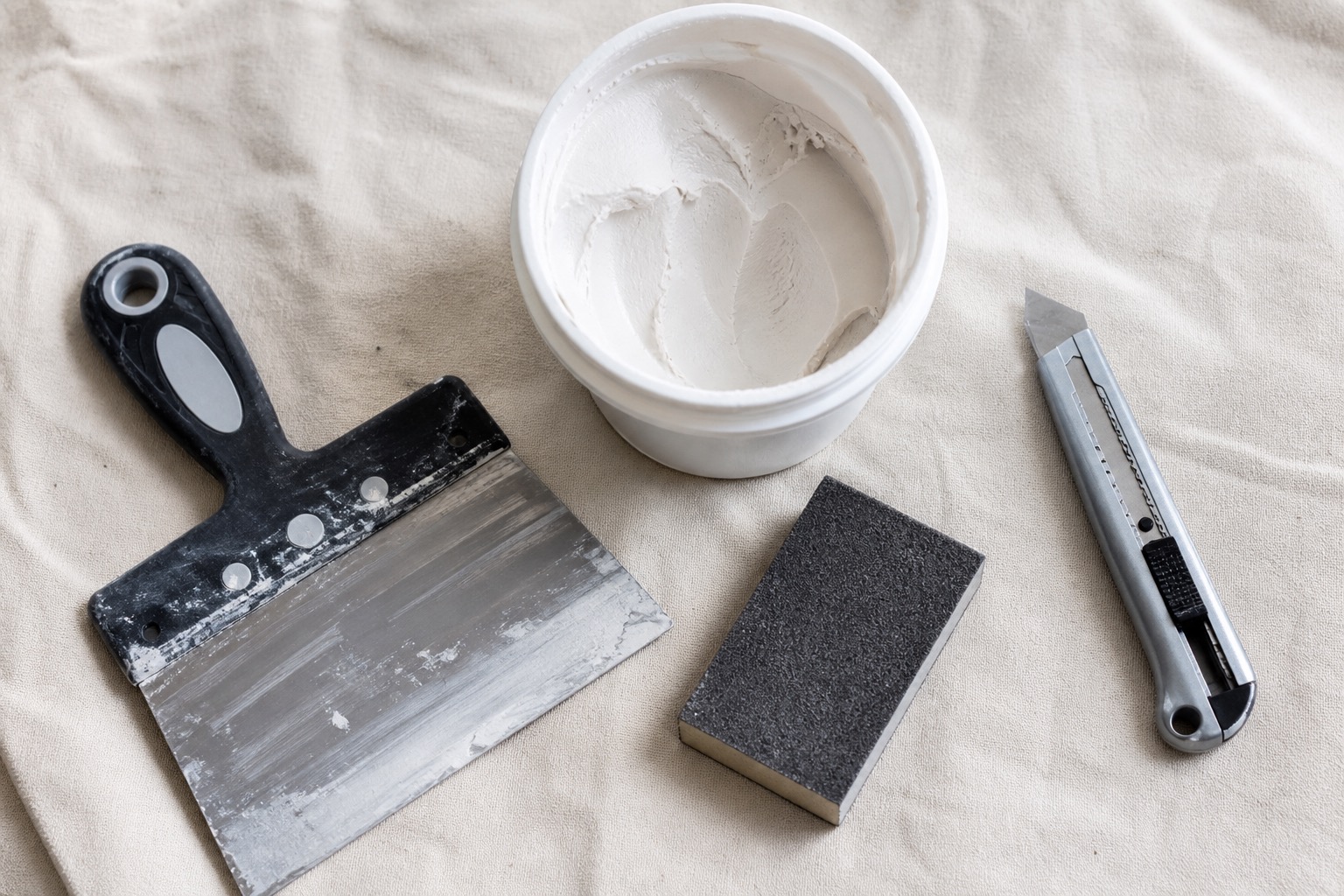
The right tools and materials make the difference between a drywall repair that disappears and one that's obvious under paint. B&M Painting and Construction relies on a consistent kit for every drywall repair job in London, KY.
Taping Knives in Different Widths
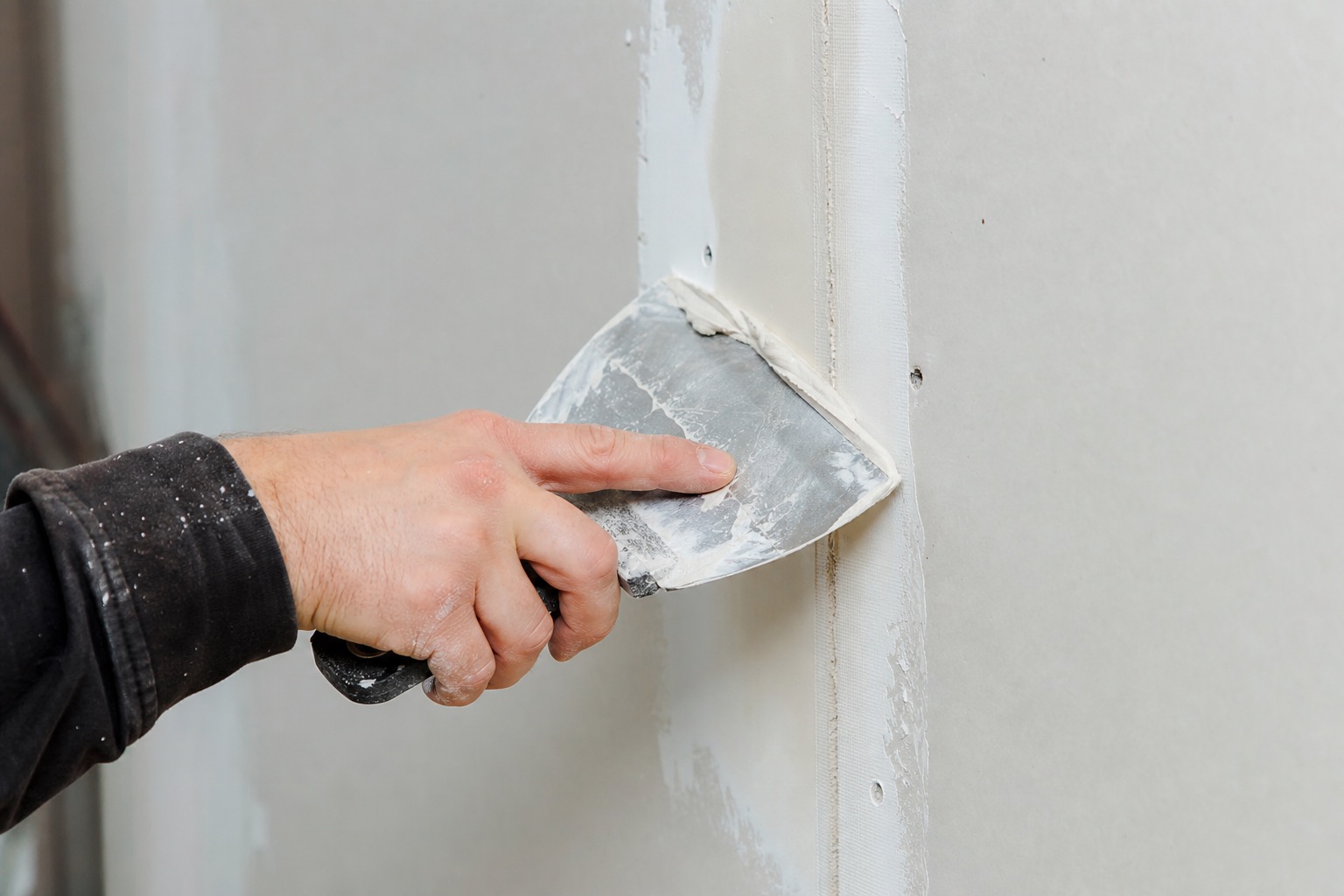
We use a range of taping knife widths, from a narrow 4-inch knife for applying the first coat over tape, up to a wide 10 or 12-inch knife for feathering the final coat smoothly into the surrounding wall.
Using only one knife size is a common mistake that makes it hard to get a smoothly feathered repair, since each width serves a different stage of the process.
We keep multiple grits of sandpaper on hand as well, since starting with a coarser grit on thick compound and finishing with a fine grit gives a smoother result than using just one grit throughout the entire repair.
Joint Compound Types
All-purpose joint compound works well for most repairs, while quick-setting compound is useful for larger holes where waiting for standard drying times would slow the project down.
We select the right type based on repair size and how quickly the project needs to move toward priming and painting.
A stable ladder or step stool suited to ceiling height is just as important as the compound and tape themselves, since working at an awkward angle or overreaching often leads to uneven application that shows up clearly once dry.
Joint Tape: Paper vs. Mesh
Paper tape creates a stronger bond for larger repairs and seams, though it requires a base coat of compound before application. Mesh tape is self-adhesive and easier to use for smaller repairs, though it isn't quite as strong for larger patches.
We choose between the two based on the size and location of the repair, prioritizing strength for high-traffic or structurally important areas.
Corner bead tools and small trowels round out our kit for repairs involving damaged corners, which need slightly different technique and materials than a flat wall section.
Sanding Tools and Techniques
A sanding sponge works well for detail areas and corners, while a pole sander helps cover larger patched areas evenly without excessive dust in a confined space.
We always sand between coats rather than only at the end, which keeps each layer smooth and reduces the amount of aggressive sanding needed on the final coat.
We clean and inspect our tools between jobs, since dried compound residue on a taping knife can leave small drag marks in fresh compound that are easy to avoid with a quick wipe-down before starting the next repair.
Patch Materials for Larger Holes
For holes too large for spackle alone, we use a cut piece of matching-thickness drywall backed by wood or drywall clips to create a stable surface for joint compound and tape.
Choosing the right backing method depends on whether the repair falls on a stud, between studs, or near an electrical outlet, which our crew accounts for during every repair.
We restock and check our repair kit before every job, since running out of a specific tape width or compound type mid-repair can force an unwanted pause that stretches out an otherwise simple project.
Keeping a Basic Repair Kit on Hand
For homeowners who want to handle very small touch-ups themselves between professional visits, a basic kit with lightweight spackle, a small taping knife, and fine-grit sandpaper covers most minor nail holes and dents.
Anything larger than a small dent or hole is worth having a professional assess, since improperly repaired drywall often needs to be redone correctly before it can be painted well.
Having the right dust control setup, including a simple containment sheet over doorways, also matters during sanding, especially in occupied London, KY homes where keeping dust out of the rest of the house is a real priority for homeowners.
Conclusion
Getting the details right on drywall repair tools and materials guide is part of how B&M Painting and Construction delivers lasting results for drywall repair across London, KY. If you have questions about your own project, our team is happy to help.
Frequently Asked Questions
Different stages of a repair call for different widths, typically starting narrow around 4 inches and finishing with a wider 10 to 12-inch knife for feathering.
Paper tape offers a stronger bond for larger repairs, while mesh tape is easier to use and works well for smaller patches.
Yes, quick-setting compound is useful for larger holes where waiting for standard drying times would slow the repair schedule.
Larger holes are patched with a cut piece of matching-thickness drywall backed by wood or drywall clips, then finished with tape and joint compound.